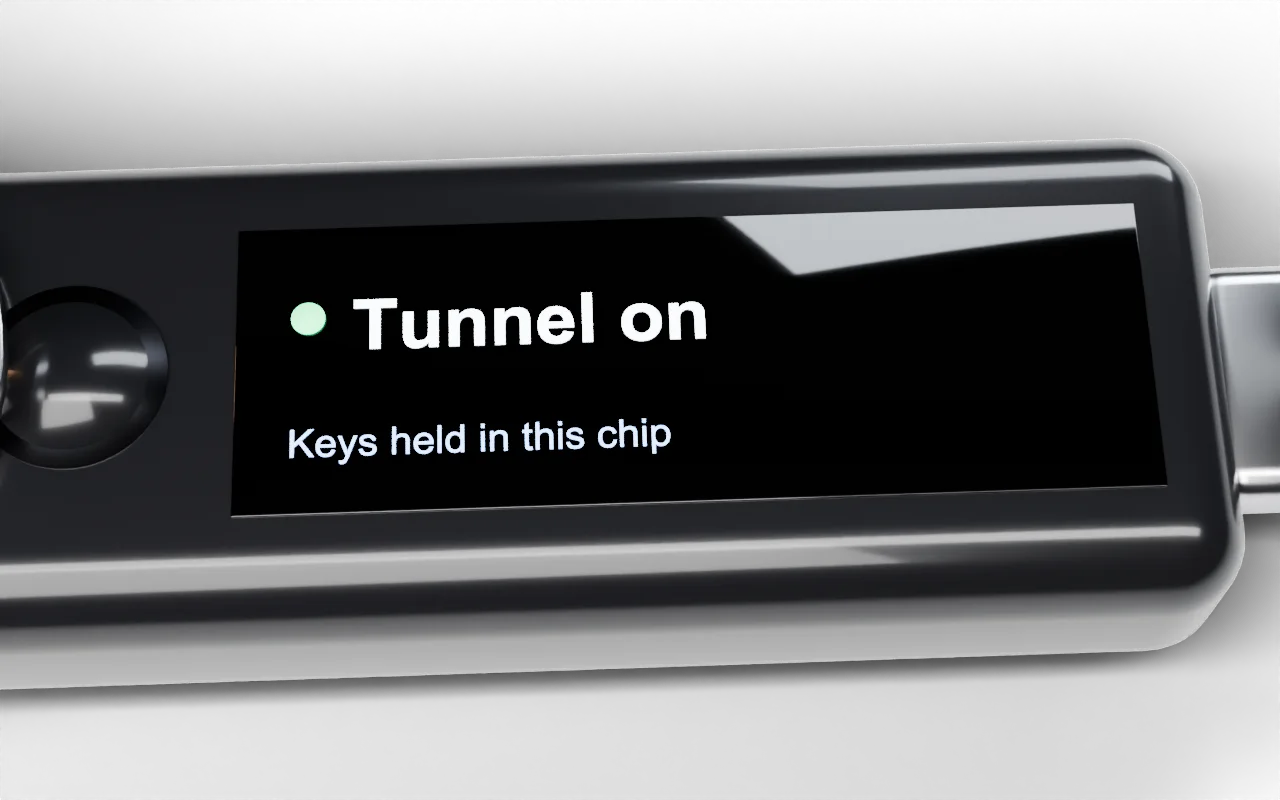
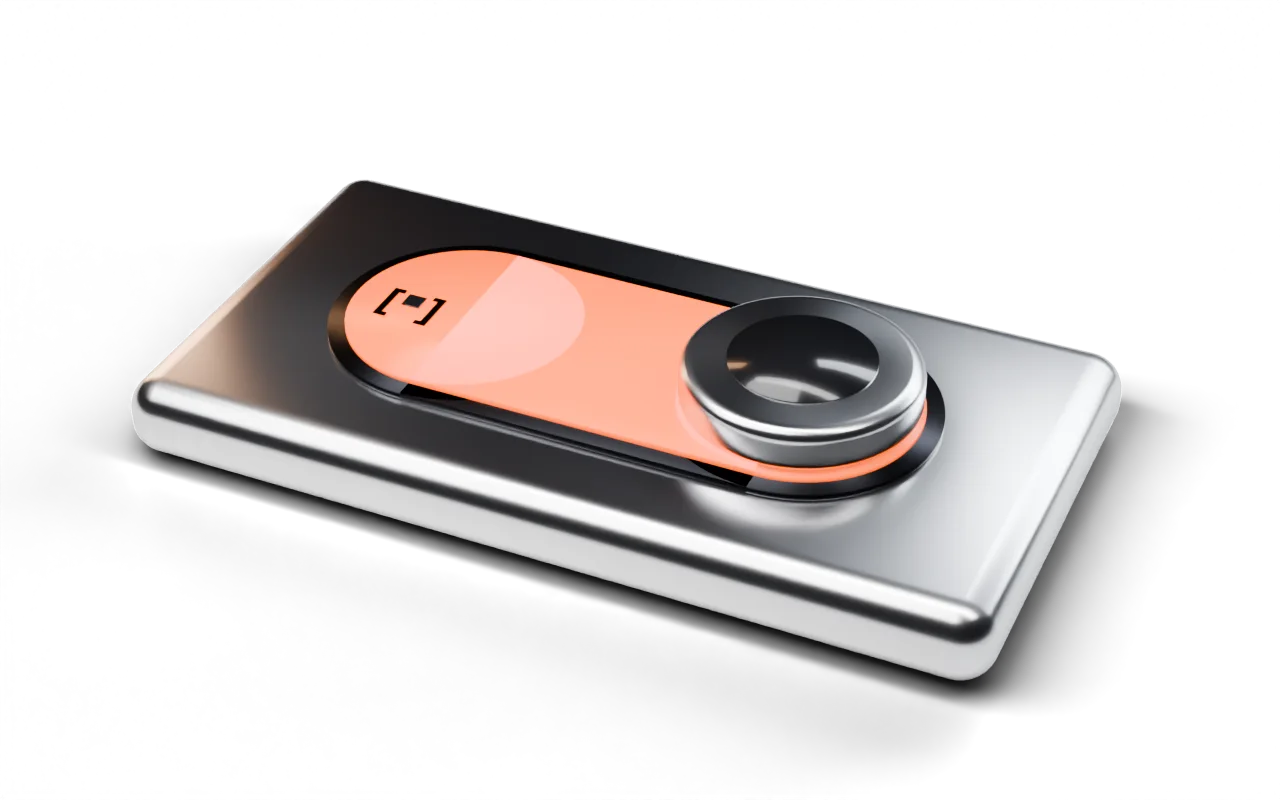
ET-01
The Switch
Uses the security chip already in every work laptop. The key that signs each receipt is made inside the chip and never leaves it.
On every laptopIncluded with ExtraTunnel
EXTRATUNNEL VAULT · ET-02 KEY
ExtraTunnel seals the data in software. Vault decides who holds the keys: the chip in every laptop, a Key in each security lead's hand, and a Box in your own building. No vendor cloud in between.
In design, built to order. Scroll to open the Key.
Your keys, in your hand.
Two of three Keys approve any change.
Every AI call leaves a signed record.
From the chip in each laptop to a box in your server room. Each one holds a part of the keys, and none of them depends on our cloud.
ET-01
Uses the security chip already in every work laptop. The key that signs each receipt is made inside the chip and never leaves it.
On every laptopIncluded with ExtraTunnel
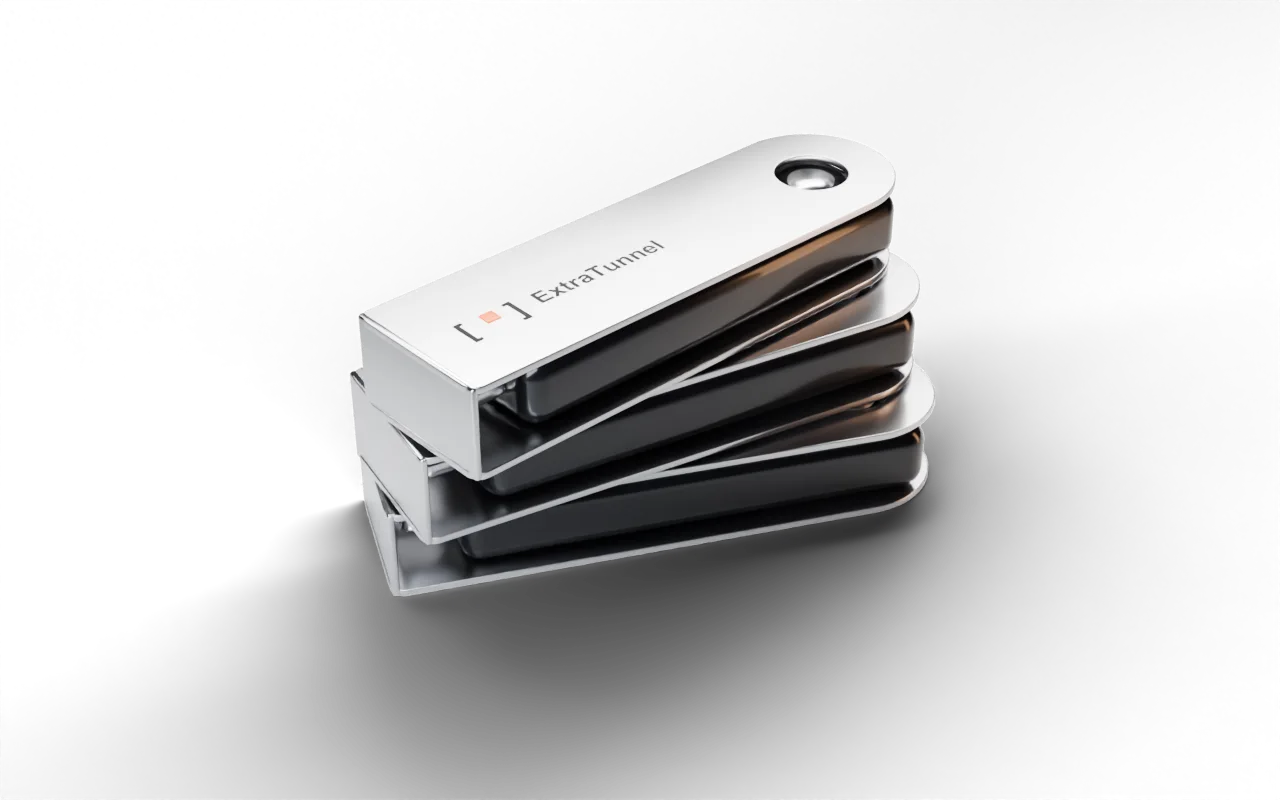
ET-02
Three Keys for your security leads. Any two approve a change to the rules, so no single person can quietly turn the tunnel off.
In each lead's handIn design
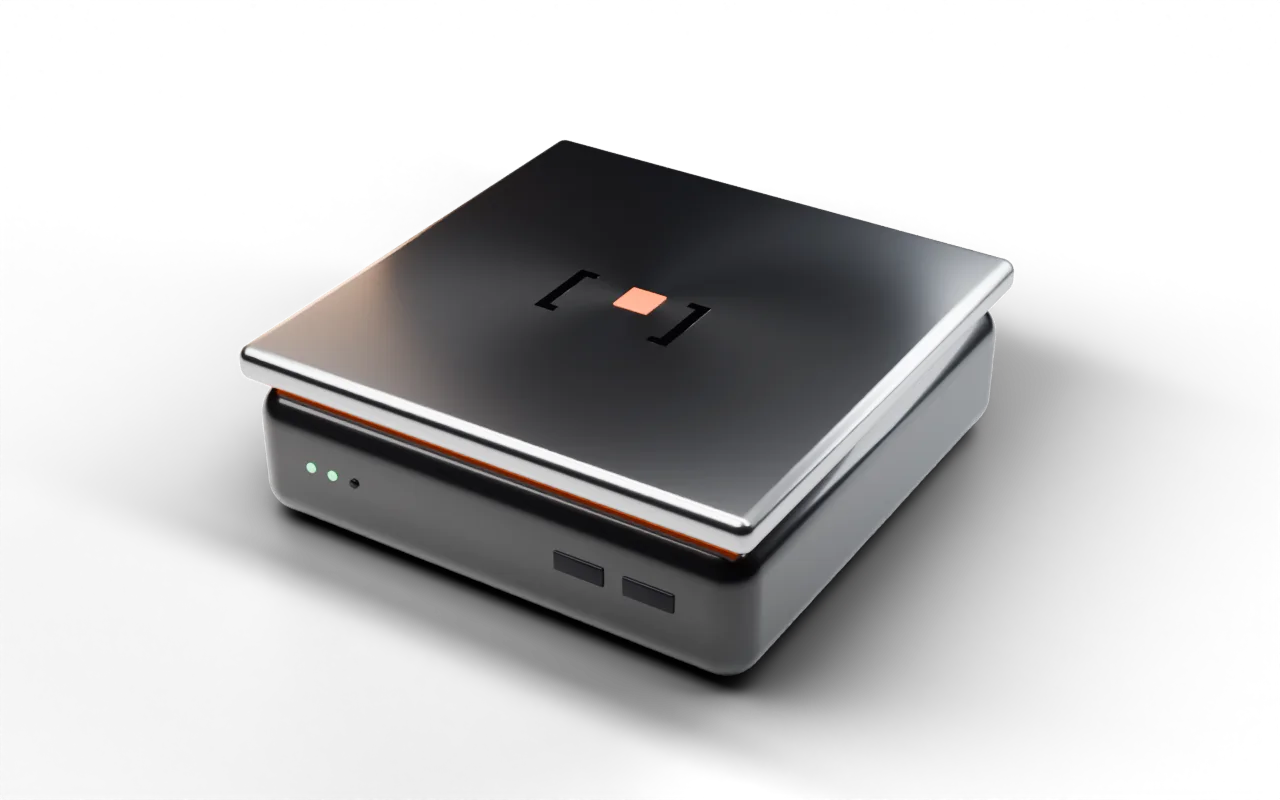
ET-03
One per site. Holds the root keys and the signed record of every AI call, in your building, not in ours.
In your server roomIn design
ET-03 BOX · EXPLODED VIEW
The Box sits in your server room. It holds the root keys that unlock sealed data, runs the name model so laptops stay light, and keeps a write-once, signed record of every AI call. Open the case and it knows.
01Steel lid
Milled from one block of steel, with the mark cut in. The orange seam lights while the Box is sealed.02Tamper mesh
A fine conductive mesh lines the lid. Lift or cut it and the circuit breaks, and the Box writes that down before anything else.03Name detector
A small accelerator runs the name model on your side, so laptops stay light and names never leave the building.04Signed log
Every AI call from every laptop gets a numbered, signed record. Written once, never edited, kept here.05Root keys
Held in a secure chip on the main board. Any two of three Keys approve a change to the rules.06Chassis
Anodised aluminium. Network and USB-C on the side, status lights in front. It talks only to your laptops.Hardware does not make sealing more accurate. It decides who holds the keys.
Regulated teams want the keys in their own hands, not in a vendor's cloud. Vault puts them there.
A record written in hardware cannot be edited quietly. Every AI call keeps its signed, numbered place.
The same tunnel runs from each laptop's chip to the Box in the server room, so one policy covers all of it.
| Software only | With Vault | |
|---|---|---|
| Who can copy the signing key? | Anything that can read the laptop | Nobody. It never leaves the chip |
| Can the record be edited quietly? | In principle | No. It is written once |
| Who can change the rules? | One admin | Any two of three Keys |
| Where do keys and records live? | Laptops and our console | Your building |
Design targets for the first build, drawn to scale. Built on open standards, so it fits the keys and servers you already trust.
The key that signs each receipt
One of three approval keys
The root keys and the signed record
Inside every work laptop
On a security lead's keyring
In your server room
The laptop's own security chip
Secure element
Secure element
Signs, never approves
Any two of three. Works with any FIDO2 key
Enforces the two-of-three rule
Signs each receipt
Shows the last receipt
Write-once, signed and chained
Built in
USB-C
Two network ports, USB-C
Status in the menu bar
OLED, under a steel cover
Status lights
None
87 × 20 × 13 mm
116 × 116 × 34 mm
None
None
None
Included with ExtraTunnel
In design
In design
Vault is built to order for the first teams who want it. The software works today with the chip in every laptop.