Is it safe to put customer data in ChatGPT
There is no single yes or no. The same paste can be acceptable in one company and a breach of a customer contract in another. What changes the answer is not the tool alone. It is the terms the tool runs under and the kind of data you give it.
The same reasoning applies to Claude, Gemini and any other hosted AI assistant.
What decides whether ChatGPT is safe for customer data
- The plan. Personal and business plans differ on how long data is kept, whether it is used to improve models and what admin controls exist. Read the terms for the plan you are on.
- The settings. History, training and sharing options change what is stored and who can see it. Defaults are not always the strictest choice.
- The contract. Two contracts matter: the agreement between your company and the AI provider, and what your own customer contracts say about passing their data to other parties.
- The data. A published price list and a list of card numbers are not the same risk. Sort the data before you decide.
Which customer data can go into ChatGPT
Use this table as a starting point. Your own policy and contracts come first.
| Data type | Example | Paste it raw? | What to do instead |
|---|---|---|---|
| Public information | Published pricing, press releases | Yes | Nothing special |
| Internal, no personal details | Process notes, draft copy | Usually, on a work account | Check your company rule |
| Contact details | Names, emails, phone numbers | No | Replace with placeholders |
| Tickets and email threads | A complaint with an order history | Not as is | Strip names, order numbers and addresses |
| Payment data | Card and bank account numbers | No | Remove it. The AI does not need the number to help |
| Health information | Diagnoses, patient notes | No, unless your agreements cover it | Talk to counsel first |
| Passwords and keys | API keys, login details | No | Remove, and rotate any that were pasted |
Laws that apply to customer data in AI tools
GDPR is the EU law that sets rules for handling the personal data of people in the EU. CCPA gives California residents rights over their personal information. HIPAA is the US law that protects health information held by health care organizations and their partners. PCI DSS is the card industry’s security standard for anyone who handles payment card data. Any of these can apply when you send customer data to an AI provider. This is not legal advice. Ask your counsel which ones cover you.
What to do instead of pasting raw customer data
- Ask whether the task needs the real values. Summarizing a complaint or drafting a reply does not need the customer’s real name.
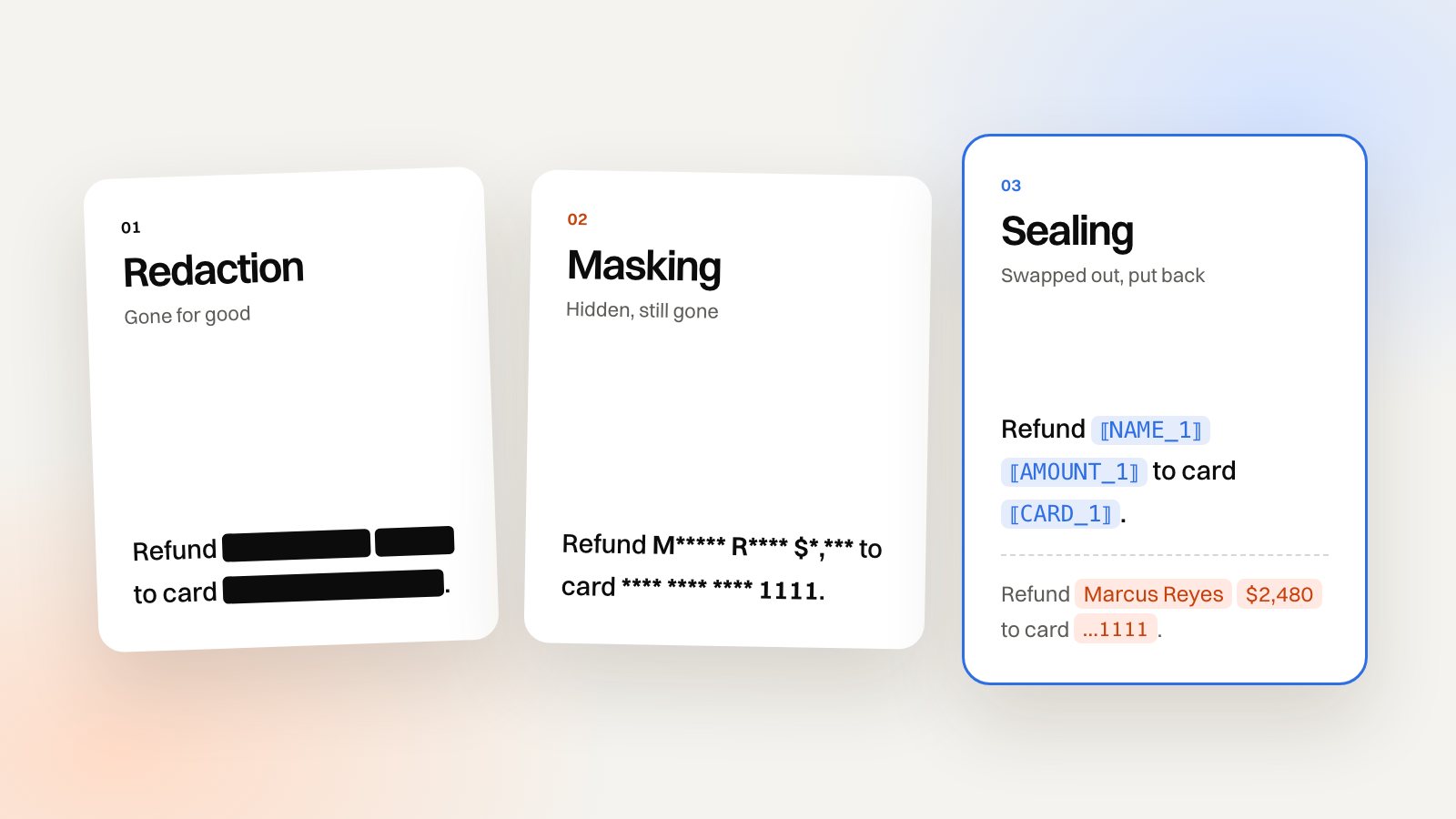
- Replace identifiers with labelled placeholders. Use labels such as [NAME_1] and [ACCOUNT_1]. Keep each label consistent so the AI can still follow who said what.
- Remove what the task does not need. Card numbers, passwords and full addresses can usually come out entirely.
- Send the edited text. Use a work account, not a personal one.
- Put the real values back yourself. Swap the placeholders in the answer for the originals on your own computer.
Placeholders work better than blacking text out. A reply written for [NAME_1] about [ORDER_1] is easy to finish. A reply full of gaps is not.
What to do if customer data was already pasted
Delete the conversation and tell your security lead. Rotate any password or key that was included. Then check whether your contracts or the law require you to tell anyone. Write down what was sent and when, while people still remember.
Sealing customer data automatically
Doing the five steps by hand works, but people skip them when they are busy. ExtraTunnel is one way to do them automatically. It runs on your own computer and works like switching on a VPN, so people keep using ChatGPT, Claude or Gemini in the browser as before.
Before a request leaves, private details such as names, account and card numbers, amounts, dates, emails and phone numbers are swapped for labelled placeholders. The AI works on the sealed text, and the real values are put back into the answer on the computer. A second, simpler program checks every request before it leaves. If the check fails, the request does not go out. Files it cannot read, such as images and scans, are held on the device instead of being sent. You keep the AI plan you already pay for. See how it works or pricing.
Common questions
Does ChatGPT train on my data?
That depends on your plan and your settings. Plans differ, so read the terms for the plan you use and check the data controls in your account.
Can I use ChatGPT to write customer support replies?
Yes, if you take out the details that identify the customer first. Replace names, order numbers and contact details with placeholders, then add the real values back to the draft.
Is a business or enterprise plan enough on its own?
A business plan adds a contract and admin controls, which helps. It does not limit what people paste, and it may not satisfy what your own customer contracts say.
Is anonymized data safe to paste?
It is safer, but check that it is really anonymous. A job title, a city and a date together can still point to one person.
Does this also apply to Claude and Gemini?
Yes. The same four factors apply to any hosted AI assistant: plan, settings, contract and the data itself.